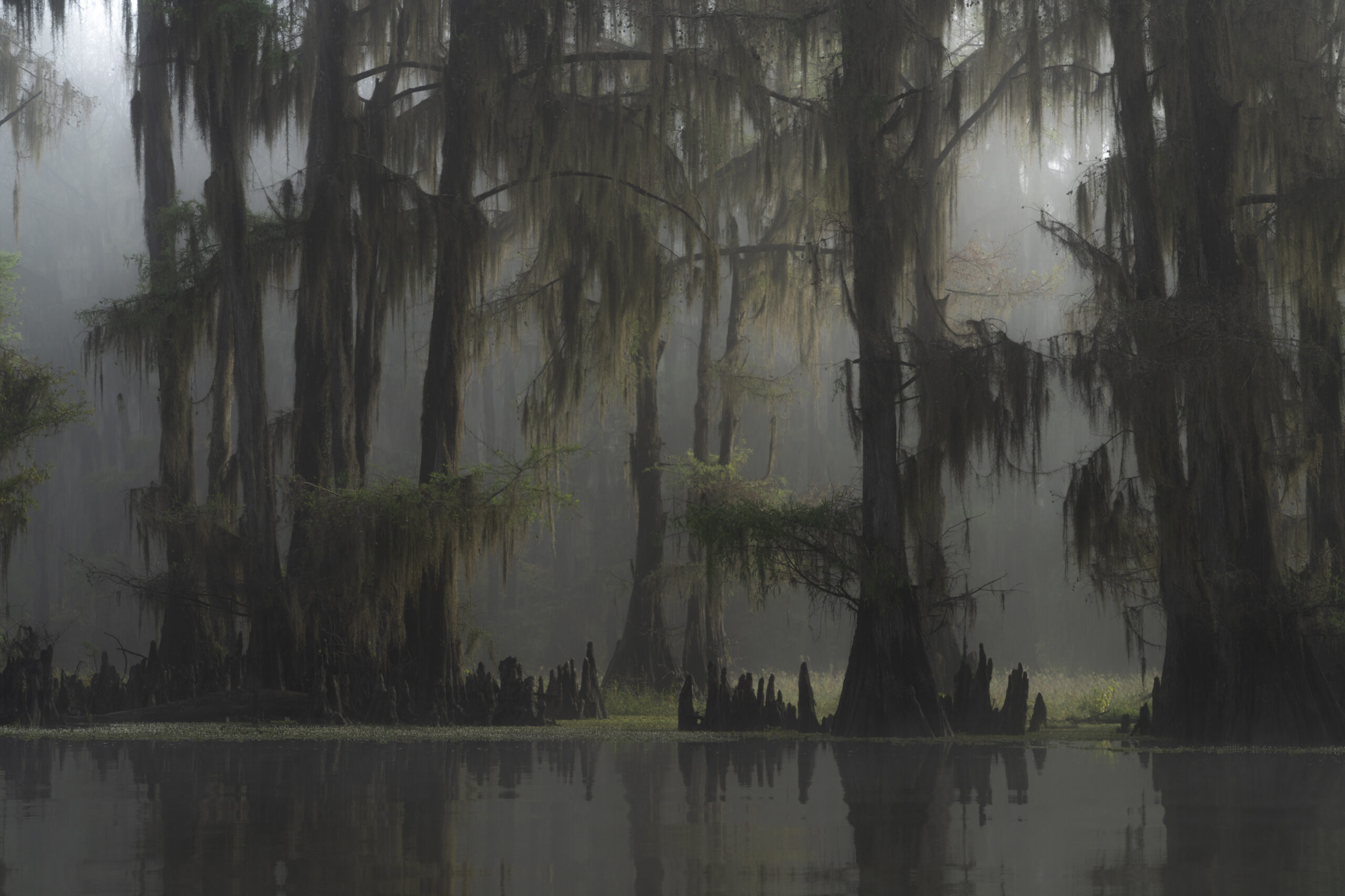
Last fall I set out for a long-anticipated visit to Caddo Lake, a place I’d wanted to photograph for years. I flew into Dallas on a Friday morning, picked up a rental car, and made the drive east toward the cypress-filled bayou landscape. By lunchtime I had checked into my room at the Spatterdock Guesthouse, staying in the cozy Caddo Cabin. The cabin sat within walking distance of the water and, most importantly, the property had its own kayak launch — something I knew I’d be using all weekend.


I only had Friday afternoon through Sunday morning at the lake, and the forecast was far from promising. Saturday called for heavy rain, strong winds, and even a chance of tornadoes. I worried the trip might end up being a wash, so I decided to make the most of the calm Friday afternoon.
Camera in hand, I walked down to the docks and started sorting through the lineup of well-worn kayaks and canoes, searching for something stable enough to keep both me and my gear dry. As I inspected the boats, I noticed tiny frogs clinging to the hulls and hopping along the grassy shoreline — a small reminder that this place teems with life before you even reach open water.

Once I found a kayak that felt right, I climbed in and paddled out through thick vegetation that filled the swampy alcove near the dock. Gradually, I slipped past the outer ring of cypress trees and into a more open channel of water. The sky was overcast but calm, which made for a perfect scouting session. I explored slowly, learning the maze of channels and getting used to shooting from a drifting kayak — something that adds a surprising level of difficulty. Stabilization becomes an entirely different challenge when both you and your tripod are gently moving, especially in low light where shutter speeds lengthen and every ripple matters.


Even in that short time on the water, the wildlife delivered. I spotted egrets, blue herons, and ibises weaving through the cypress shallows. The lake felt alive in every direction. Still, the light never really came together. Sunset fizzled, and I headed back to the cabin wondering if the weekend might slip by without producing anything special.


That night, heavy rain hammered the roof. I checked the forecast again before bed and noticed a possible break at dawn, so I set my alarm just in case.
When it went off, it was still dark. I couldn’t hear rain on the roof, so I took that as my cue and headed out. A light drizzle lingered in the air, and thick cloud cover ruled out any dramatic sunrise. But the storm system had shifted, and instead of being trapped indoors, I suddenly had a full day to explore.
The conditions stayed dark and moody through the morning, with intermittent rain drifting across the lake. By afternoon, breaks in the clouds finally allowed shafts of light to filter down, adding depth and drama to the cypress groves. Chasing light through that maze of trees was both frustrating and thrilling. Wildlife continued to appear — this time in the form of osprey and cormorants.


Of course, Caddo Lake is also home to alligators, and I had heard enough mixed stories to keep that thought in the back of my mind.
Late in the day, I found a scene that immediately caught my attention: a patch of lilies with a blooming flower in the foreground and a moss-draped cypress standing beyond it. I tried to hold position near the edge of the vegetation, but my kayak kept drifting. Hoping to stabilize myself, I gently paddled into the plants so they could anchor me in place.

It worked — until it didn’t.
Just as I prepared to take the shot, a loud slap exploded from the water and vegetation maybe five feet in front of the bow. The surface churned violently as something dove beneath it. I didn’t wait to identify what it was. I shoved backward as fast as I could, retreated into the open channel, spun the kayak around, and paddled hard while glancing over my shoulder.
A pontoon boat approached from behind and slowly passed me. I fell in behind it for a while, letting my nerves settle as we moved away from the area. I never confirmed what made that sound, but I didn’t need confirmation to stay alert for the rest of the trip.
That evening I decided not to risk being alone on the water in the dark. Instead, I shot sunset from shore. The sky cleared just enough to raise hope, but once again the clouds refused to cooperate. Another golden hour slipped by without results.
By then I knew I had only one chance left: Sunday morning.
When I woke and looked outside, my heart sank. Thick fog had settled over the landscape. Sunrise color was out of the question. But after a moment, disappointment gave way to possibility. Fog might not deliver the sunrise I imagined, but it could offer something even more atmospheric.
That’s one of the things I love most about landscape photography — the conditions rarely match the picture you had in your head. Instead, they challenge you to see something new.
I returned to the same shoreline I’d used the night before. The fog created beautiful separation between the cypress trees scattered across the water. Fishermen prepared their boats nearby, their silhouettes dissolving into the mist as dawn slowly brightened the sky.


Then, about forty minutes after I arrived, the sun finally pierced through. Warm light filtered across the fog and illuminated strands of Spanish moss hanging from the bald cypress. The scene transformed instantly — soft, golden, and timeless. It was exactly the feeling I’d hoped to capture when I planned the trip.
As the sun climbed higher, the fog thinned… then surprisingly drifted back in, turning the atmosphere eerie and quiet again. With a few hours left before departure, I launched the kayak one final time. The lingering fog wrapped the trees in isolation and mood, and I found compositions everywhere I looked. It felt as if the lake had decided to send me off with something special after all.


When it was finally time to leave, I packed the car and paused for a moment. A breeze stirred the air. Spanish moss swayed gently from the trees. Somewhere out on the water, birds called through the mist.
And if lakes could talk, I swear this one whispered:
“Y’all come back now, ya hear.”
See more images from this trip in the Caddo Lake gallery of my portfolio:

Interested in prints from this trip?
Images from my Caddo Lake trip are available as fine art prints. Each piece is crafted to preserve the atmosphere and mood of the bayou landscape. They are available in both metal and paper in various sizes:
-

Echoes in the Water
Price range: $100.00 through $1,000.00 -

Solitary Gold
Price range: $65.00 through $2,000.00 -

Veil of the Cypress
Price range: $65.00 through $2,000.00

Comments are closed